Home » Posts tagged 'Sociology' (Page 5)
Tag Archives: Sociology

Embrace Illusion
We see what we want. We don’t see what’s right in front of us. We need to learn how to look if we want to see what we’ve been missing.
Time — 4:13

Fox and Hounds: A Debate for our Time
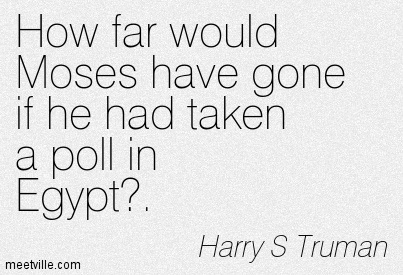 More than 1500 years ago, the Talmud predicted an era in which the generation would have “the face of a dog.”
Dogs walk out in front of their owners, creating the appearance that they are leading the way. But a sharp pull on the leash and the dog falls into line, surrendering its will to the will of its master.
Could there be a more accurate description of modern leadership, where our “leaders” look to polls and constituencies before tailoring their message and their policies to fit what is popular and what will keep them in office?
It seems to work, despite the irony that public approval of our public officials continues to plummet. Like the family pet, too many of us are happy enough if we have food, a place to sleep, and masters who tell us how much they love us.
Others are disgusted by the implosion of the system, so much so that they are willing to embrace a self-promoting egomaniac with no redeeming qualities except the one that might matter most: a willingness to say what he really thinks.
This is where things will stand tonight as Fox News hosts the first Republican debate. Maybe a true leader will rise up out of the melee. But for now, all we hear is a lot of barking.

The Language of Confusion
 Political Correctness has reached a new high — or low — at the University of New Hampshire, where administrators have issued a Bias-Free Language Guide. Forbidden words include the following: “mothering, fathering, healthy, homosexual, rich, poor, senior citizen, and American.”
Perhaps we should find it comforting that a taxpayer-funded school is prepared to go so far to protect its students from hurt feelings. Presumably, educators believe that this measure will improve student’s self-esteem and thereby lead to greater success in the workplace.
Once again, life imitates art, as I discussed in this essay from 2009, written to honor the 60th anniversary of George Orwell’s 1984.
If only they would teach it in New Hampshire.
It never takes more than a day or two into the new school year before I hear the chant of my students’ favorite refrain: That makes no sense!
“What you mean,” I answer the first student who utters that unutterable phrase, “is that you don’t understand.”
“That’s what I said,” the student responds, predictably. “It makes no sense.”
“It makes perfect sense,” I insist, “as you will see once you understand it.”
The student doesn’t give up without a fight. “You know what I mean,” he says. “What difference does it make how I say it?”
“It makes no sense implies that, if the material we are learning does not conform to your way of thinking, then it must be wrong. I don’t understand acknowledges the possibility that the flaw in reasoning may reside in you, rather than in the material.”
He stares back at me, trying to digest this new idea. Over the course of the year, through constant repetition, most of my students will learn never to saythat makes no sense. At least not in my class.
I’ve been challenged on this many times. Is it really my job to belabor this point, to demand that my students express ideas concisely, even when the intent is clear? After all, I’m not a speech or language instructor. Why not just teach the material I’m being paid to teach?
WE THINK WHAT WE SPEAK
In his essay “The Principles of Newspeak,” the appendix to his classic novel, 1984 (published 60 years ago this month), George Orwell describes how the leaders of his totalitarian future have contrived to assure their hold on power by replacing English with Newspeak, a language containing no vocabulary for concepts contrary to the platform of the state-run Party. By controlling language, the Party controls its people’s very thoughts.
 Intuition suggests that language is a product of thought: if we think clearly, automatically we will speak clearly. Orwell demonstrates the opposite, that thought is a product of language. Because we formulate our thoughts in words and sentences, incompetent use of language guarantees muddled thinking. If there are no words for rebellion, uprising, or discontent people will find it difficult to formulate and articulate the concept of overthrowing even the most corrupt and oppressive government.
Students of Orwell will shudder when applying this simple axiom to the corruption of modern language. Advertisers and politicians have known for years that the best way to manipulate public perception is by arranging words in unconventional combinations. Car dealers know that potential customers will feel better buying cars that are “pre-owned” rather than “used.” A certain former president knew that the American people would not respond to the gravity of his presidential peccadilloes if distracted by pondering what the meaning of “is” is.
But linguistic confusion became institutionalized with the rise of political correctness. By dodging frantically out of the rain of potentially offensive terms, we soak ourselves in a torrent of euphemisms for simple words the thought-police deem pejorative. When illegal aliens become “undocumented workers,” we lose all sense of the danger posed by the porous condition of our borders. When terrorists become “insurgents,” we more readily accommodate the moral equivalence that blurs the line between aggressors and defenders. When abortion becomes “reproductive freedom,” the horror over the indiscriminate murder of innocents vanishes altogether.
Similarly, when marriage is bereft by judicial fiat of the definition that has served for thousands of years, the foundations of the family structure erode like sand castles before the approaching tide. And as it becomes taboo to make any direct reference to race, class, ability or performance without fear of hurting one group’s collective feelings or another group’s collective self-esteem, the words that form our thoughts and understanding end up so fully shorn of their dictionary definitions that they cease to mean much of anything at all. In short, nothing makes sense.
CONFUSION BY DESIGN
In truth, for advertisers, politicians, special interest groups, and the politically correct, the real purpose of language is no longer to convey meaning – it is to obscure meaning, to appeal to emotions while bypassing the intellect. Their motive is obvious: it is far easier to evoke a strong emotional response than it is to present a logically developed argument. But by allowing meaning to be drained from our language and our words, we have not only denuded them of their clarity, but also of their depth.
Even worse, we are no longer allowing confusion to reign free but legislating it into the public square. Earlier this year, London decided to remove apostrophes from its street signs. King’s Heath will now become Kings Heath. What’s the reason? Apostrophes are too confusing.
According to Councilor Martin Mullaney, who heads the city’s transport scrutiny committee, “Apostrophes denote possessions that are no longer accurate, and are not needed,” he said. “More importantly, they confuse people. If I want to go to a restaurant, I don’t want to have an A-level (high school diploma) in English to find it.”
Linguistic laziness in both syntax and vocabulary has worn smooth the sharpness of our minds. When I say that I love my wife, and I love my car, and I love ice cream, am I not indulging a subtle self-hypnosis that affirms an equation between all three, that suggests that my feelings for my wife is no more profound than my taste for Baskin Robbins and BMW? By impoverishing our words, we impoverish our thoughts as well.
 What is love? And what is honor? and loyalty? and commitment? As we strip our language of both its clarity and its nobility, these concepts become caricatures of what they once were, defined by the mass media who, like the Orwellian Party, have as their only concern the selling of their own values and their own agenda. And as much as we the people are willing to buy, they will continue to sell.
“Teachers, be careful with your words,” warns the Talmud, “lest the disciples who follow you will drink of evil waters and die.” When the waters of wisdom become polluted with confusion and contradiction, it is society’s youth who will pay the price through the erosion of moral clarity and moral principles.
Back in the classroom, my student continues to stare at me, contemplating my rebuke for a few more seconds before he responds. “What I meant to say,” he finally answers, “is that it makes no sense to me.”
I shake my head. “Don’t make it sound like what you want it to mean,” I tell him. “Just say it the way it is.”

Paradise

Completed in 2004, this jailhouse in Leoben, Austria, was designed by world-renowned architect, Jospeh Hohensinn. With a maximum occupancy of 205 inmates, overcrowding is not a problem.
Paradise /ˈpærəˌdaɪs/ n., late 12c., from Old French paradis (11c.), from Late Latin paradisus, from Greek paradeisos.
A place where everybody has guaranteed employment, free comprehensive healthcare, free education, free food, free housing, free clothing, free utilities, and only law enforcement officers carry firearms.
And, contrary to popular belief, such a place already does exist:
It’s called “Prison.”
Hat tip: Todd Rush and Steve Glassman

“No Awareness” Zone?
From Stuff.co.nz:
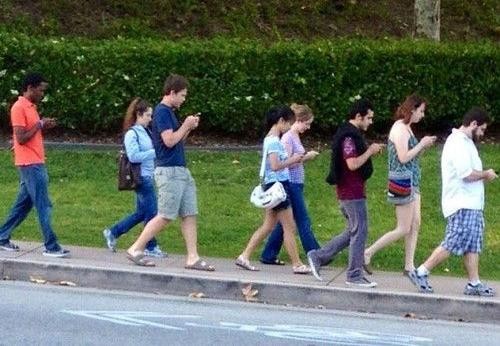 “A Belgian city has come up with a solution to the problem of pedestrians bumping into other people while sending text messages from their mobile phones.
“Antwerp has given smartphone users their own designated lanes, where they can walk while texting or looking at their mobiles without irritating or endangering others.
“The narrow corridors are marked “text walking lane” in English on a number of busy pedestrian shopping streets in the city centre.
“Negotiating the corners is likely to remain challenging for people whose eyes are glued to their phone screens.”
Philadelphia did this last April Fool’s Day as a joke. When life imitates art, should we laugh or cry?
The question answers itself: is there really anything funny about people too preoccupied to watch where they’re going who need the government to step in and protect them from themselves?

Jewish Billionaires put their Mouths where their Money is
Jewish billionaires Sheldon Adelson and Haim Saban have organized the first meeting of its kind, bringing together 50 Israeli and pro-Jewish corporations to push back against anti-Israel boycotts (BDS).
The real tragedy is that their efforts are necessary. The superficiality that typifies the Western World is self-evident with even the most feeble efforts to scratch the patina of political correctness that turns perpetrators into victims and victims into provocateurs.
 Shame on those who perpetuate the myth that Israel is the source of Arab suffering. Shame on those who provide the millions in aide that Gaza Arabs never see because their leaders spend it on high-tech tunnels for attacking Israeli civilians. Shame on those who caused hundreds of West Bank Arabs to lose their jobs by pressuring Soda Stream to move their production plant back across the “green line.” Shame on those who don’t hold the leaders of surrounding Arab nations accountable for ignoring the plight of Arab refugees for 60 years so they can vilify Israel for their own criminal negligence.
And shame on Jimmy Carter and his ilk who perpetuate the demonstrable lie that Israel is an apartheid state.
Would an apartheid state produce an Arab citizenry that has a higher standard of living, literacy, and longer life expectancy than that of the surrounding Arab nations? Would it have permitted a sitting Arab Supreme Court justice, Arab ministers, generals, ambassadors, and consulate-generals, an Arab Israeli national soccer team captain , and an Arab Miss Israel?
But ideologues never let facts get in the way of ideology. The successful western world must be held responsible for every evil in the world, even as radicals sacrifice their own lives to destroy the societies that allow well-meaning fools to enable the agents of their own self-destruction.

Are you too sure for your own good?
“Understanding the distinctions between probability and certainty is one of the keys to developing a sociological imagination (and becoming an educated citizen, for that matter). One of the fascinating aspects of social science is using research tools to test assumptions through collected data—typically through multiple studies in a variety of settings.”
 This insightful post by Karen Sternheimer raises two critical points.
First, aside from death and taxes, there’s no such thing as a sure thing. Everything we do is based in probable outcomes. In the game of life, we are all gamblers.
But that’s as it should be. The difference between a gambler and an investor is largely semantic. We take a chance every time we cross the street, and success in any enterprise depends on weighing risk against reward, assessing the odds of winning against the odds of losing, calculating how much might be won and how much might be lost.
“Thinking about probabilities, rather than certainties, leads us to ask questions that help us understand sociological phenomena in much more depth than assumptions do.”
The problem is that most of us don’t want to do the hard work of making sure our facts are in order and our reasoning is sound. We’d rather listen to our gut, which is notoriously unreliable; after all, it’s a lot easier to take confidence in feelings and assumptions, than to deal with uncertainty.
The second point is the likelihood of children learning from their parents’ examples. If we gamble, chances are our children will, too. If we gamble recklessly, we are setting them up for disaster. But if we never take risks, our children may grow up timid and unaccomplished.
However, if we play the odds wisely, not waiting for the sure thing that will never come but neither betting the farm on long-shots… if we do our due diligence to make cautious bets when the probabilities are in our favor and the potential losses are manageable, then odds are our children will learn to be responsible gamblers themselves and will have the best chance for success in life that we can pass on to them.
Speak Truth to Powers
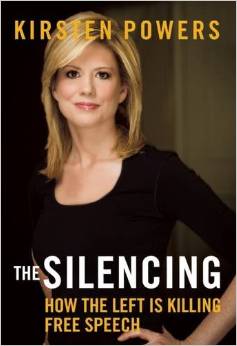 How refreshing that there are people like Kirsten Powers in the world.
In her new book, the outspoken, unapologetic liberal Democrat has taken aim at the militant search-and-destroy tactics employed by many liberals to shut down civil discourse and bully ideological opponents into submission.
Not surprisingly, many on the left have turned their attacks upon Ms. Powers and her book, proving her point by doing exactly what she accuses them of doing.
The intellectual laziness of groupthink lies at the heart of the deep divisions that are tearing this country apart. If more people would listen — listen to each other, and listen to Ms. Powers’s message — America might start turning back toward a culture of problem-solving and away from character assassination and political dogma.

Embrace the Unknown and Discover Joy
 Question #1: You’re at an auction. Item #12 is a set of six glass goblets. Item #13 is a mystery set of either four or six glass goblets… you’ll only find out once the bidding is over. Which item is likely to go for a higher price? Needless to say, you would be willing to pay more when they know you’re getting six goblets than you would if you might end up with only four.
Question #2: You’re working at a job for which you will be paid $20. The person next to you is doing the identical job, but doesn’t know whether he will be paid $10 or $20. Who is going to work harder? Needless to say, you will, since you know that you’ll be paid at least as much and maybe twice as much as the other guy.
But guess what? Research shows just the opposite.

Collateral Damage from the Grievance Industry
In a deeply insightful column, Thomas Sowell offers an observation that should be obvious to everyone:
 “[C]ommunities scattered across the country were disrupted by riots and looting because of the demonstrable lie that Michael Brown was shot in the back by a white policeman in Missouri — but there was not nearly as much turmoil created by the demonstrable fact that a fleeing black man was shot dead by a white policeman in South Carolina.” (Emphasis added.)
Mr. Sowell goes on to make the point that the grievance industry cares about neither truth nor justice. A guilty white cop indicted for killing an innocent black man isn’t newsworthy; an innocent white cop exonerated for killing a black criminal is cause for moral outrage.
And this is what is all comes down to: self-serving leaders and rabblerousers want outrage. They want to rail against the unfairness of it all, against the gap between rich and poor, against the indignity of stop-and-frisk, against the “legacy of slavery.” What they don’t want is to search for solutions, much less find them. That would mean an end to the victim-culture that has allowed them to exploit the disadvantages of their own brethren for their own profit and power.
“In a world where the truth means so little, and headstrong preconceptions seem to be all that matter, what hope is there for rational words or rational behavior, much less mutual understanding across racial lines?”
Let’s hope Mr. Sowell’s lament isn’t the sad epitaph for any hope of achieving, or restoring, a civil society.
 Yonason Goldson